
Jardin Majorelle: at a glance
- An artist’s garden created by Jacques Majorelle, then rescued by Yves Saint Laurent, famous for its Majorelle blue and its cactus collections, in the Guéliz district.
- Tickets, personalised and with a specific time slot, are sold online only: book several days in advance, as the first morning slot sells out fastest.
- Allow 1hr to 1hr 30 for the visit, avoid the 1pm–4pm window in summer to escape the heat, and add the Museum of Berber Arts to enrich your visit.
En Jardin Majorelle is the most visited site in Marrakech, and the one where a poorly prepared visit costs you the most: no ticket to be found the day before, a midday slot under a vertical sun, packed pathways. Well organised, the visit lasts an hour to an hour and a half and remains one of the finest moments of a stay in Marrakech. Here is what you’ll see, how to get a ticket, what time to come and how to extend the experience with a Marrakech Insiders tour.
What the Jardin Majorelle really is
The site is named after the French painter Jacques Majorelle, who created it from the 1920s onwards, in what was then only a palm grove on the edge of town. There he acclimatised plants brought back from several continents and painted the buildings an intense ultramarine blue, since known as Majorelle blue. The garden was bought in 1980 by Yves Saint Laurent and Pierre Bergé, who saved it from a property development before opening it to the public.
It is therefore not a historic Moroccan garden but an artist’s garden, with a highly refined botanical composition: collections of cacti and succulents, bamboo groves, ponds, narrow pathways that frame the views. Its architecture combines the Art Deco style, cubism and Moorish influences, all set off by this unique blue. The site is compact — you can walk round it effortlessly — and that is precisely why the crowds are felt straight away.
Located in the Guéliz district, the garden lies about fifteen minutes by taxi from the medina and roughly ten minutes’ walk from the centre of Guéliz. To explore this district after visiting the garden, the Paseo Esencial by Marrakech Insiders offers a fully bespoke itinerary to discover two of the city’s three facets: modern Guéliz, the historic medina y el Palmeral.
What is there to see on site?
The garden, its collections and its colours
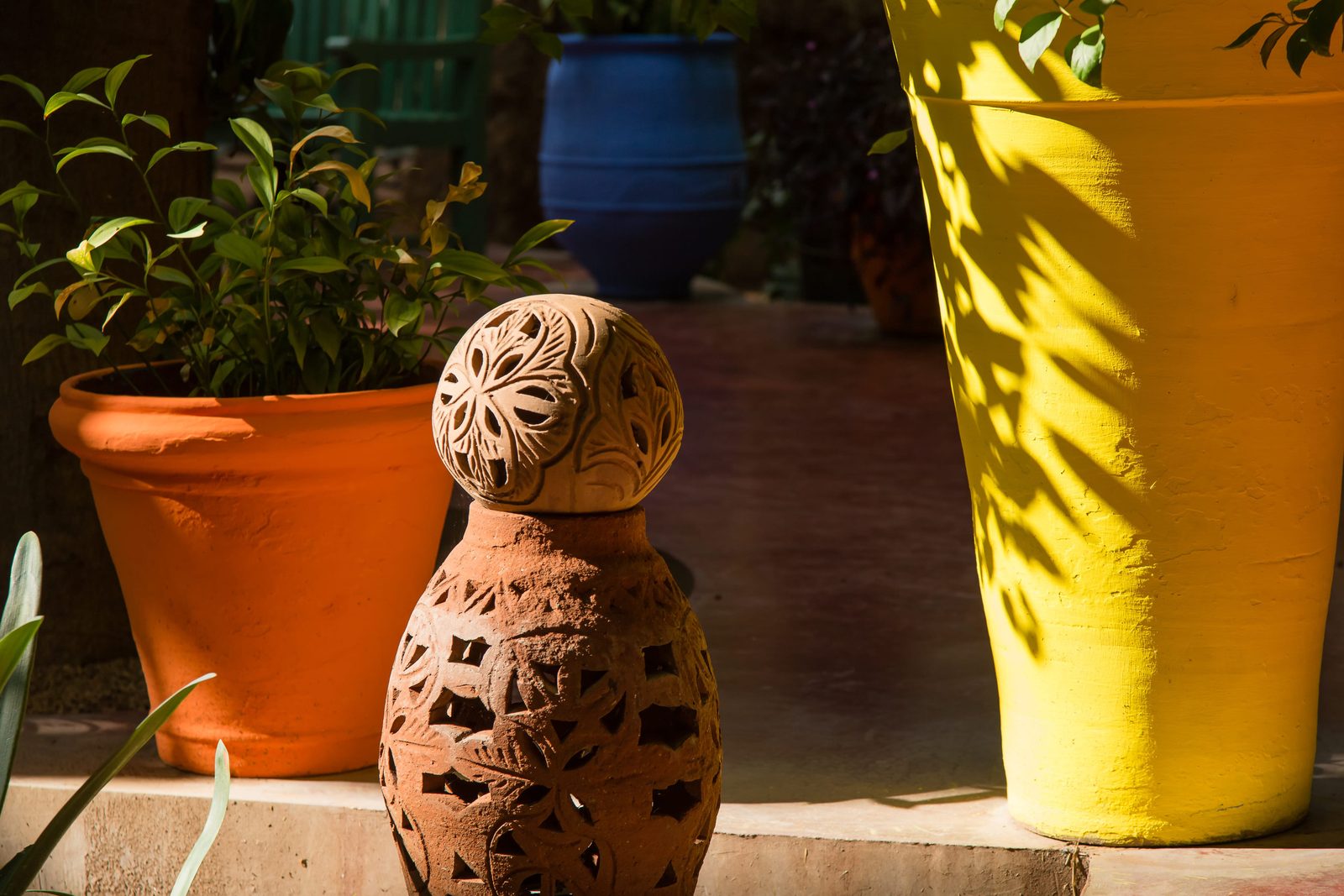
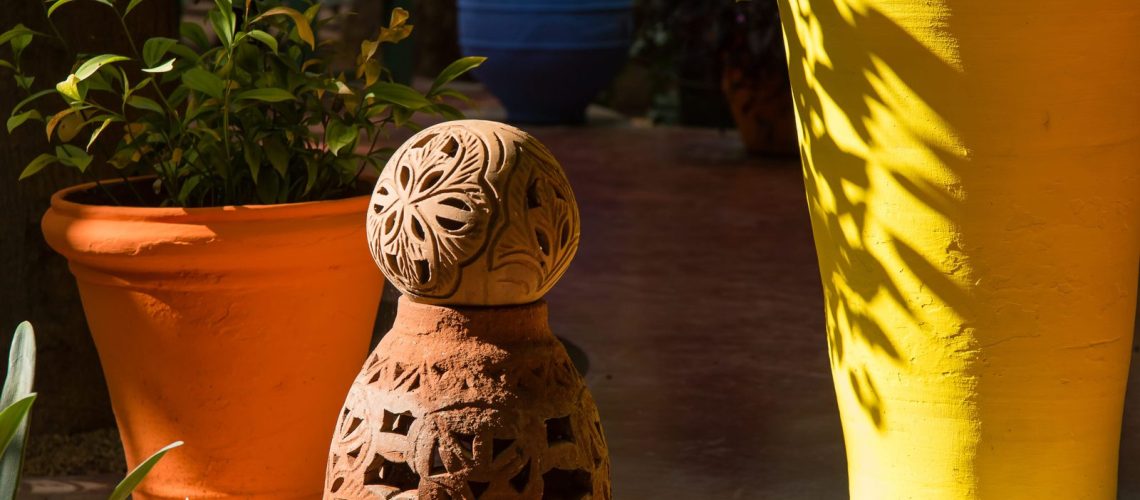
The walk is arranged around the blue villa and its studio. The cacti occupy the most exposed area, the bamboo and palm trees create continuous zones of shade, and the ponds add the gentle sound of water that makes all the difference in summer. Bright yellows, deep blues and greens echo one another from one pathway to the next: it is a painter’s composition, to be walked slowly.
An hour is more than enough to discover the garden alone. Bring water and a hat, even in winter, as the sun remains strong. Bear in mind too that the pathways are narrow: a wide pushchair moves through them awkwardly at peak times. If you are travelling as a family, The Kids Ride can extend the morning with a side-car ride suited to children between the city and the Palmeraie.
The Pierre Bergé Museum of Berber Arts

Housed in the painter’s former studio, the Pierre Bergé Museum presents jewellery, textiles, weapons and everyday objects from the various Amazigh regions of Morocco. The route is short, dense and well staged; the jewellery room, in particular, holds children’s attention longer than one might imagine.
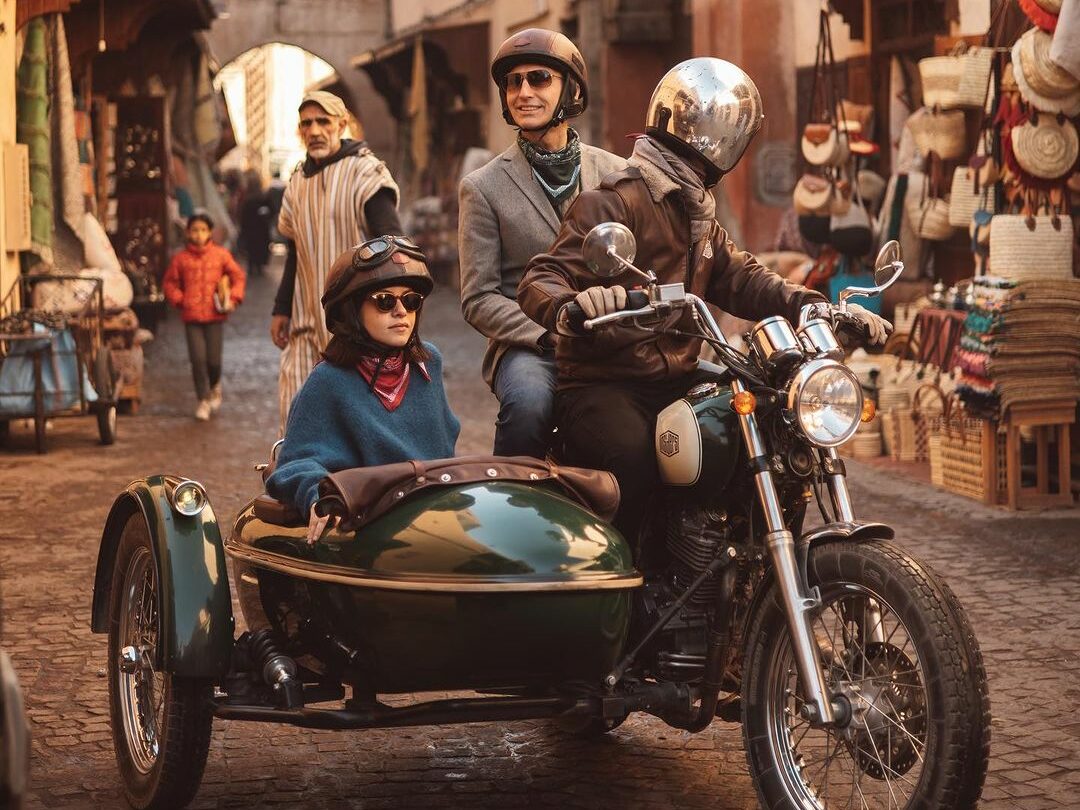
Prepárate para tu próxima aventura con nuestras excursiones en sidecar en Marrakech
Allow thirty to forty minutes. It is also an excellent refuge: the room is cool and dark, which makes it the ideal stop in the middle of a summer visit.
Booking: the part that really needs preparation
Tickets are sold online, and online only
This is the key point to remember: there is no ticket office on site. Tickets are bought from the official online ticketing service: you will receive a QR code to access the Jardin Majorelle, the Pierre Bergé Museum of Berber Arts and the Musée Yves Saint Laurent Marrakech. They are personalised and linked to a specific time slot, with a tolerance of about fifteen minutes if you are late. They go on sale several weeks in advance, and the most sought-after slots — those in the very early morning — sell out first.
In practice: book before you leave if your dates are set, or at the very least several days in advance. Go through the official website: resellers guarantee neither the slot nor the price. Finally, check the price when you book, whether you choose the garden alone or a combined package with the neighbouring Musée Yves Saint Laurent.
The right slot depending on the season
The garden generally opens at 8.30am, with a last entry half an hour before the 6pm closing time. The first morning slot is the only one that combines coolness, soft light and pathways that are still walkable; it is also the one that books up fastest.
From June to September, it is best to avoid the 1pm–4pm window: the shade is patchy, the heat hard to bear and the light unflattering for photos. In winter, late afternoon becomes a good option, with the raking light setting off the blues. As the neighbouring museum is closed on Wednesdays, avoid scheduling this half-day on that day if your stay is short.
What budget should you plan for?
Admission to the major sites of Marrakech is generally between €7 and €15, while the most prized private venues can reach around twenty euros. The garden belongs to this second category. Here are a few indicative benchmarks, to be confirmed when you book:
| Package | Budget benchmark | What it offers |
|---|---|---|
| Garden only | Top end of the city’s sites | An hour’s walk, fixed time slot |
| Garden + Museum of Berber Arts | Slight supplement | The best time-to-interest ratio for a morning |
| Combined package with the Musée Yves Saint Laurent | Better value than separate tickets | A full half-day, without queuing again |
| Coffee or lunch in the area | €20 to €40 per person | Handy between two visits, during the hot hours |
The supplement for the Berber museum is almost always worthwhile: it adds little to the budget while clearly enriching the visit. Conversely, the combined package with the Musée Yves Saint Laurent is only worth it if you genuinely plan to do both on the same day. Otherwise, two separate tickets, at two different moments of your stay, will make more sense.
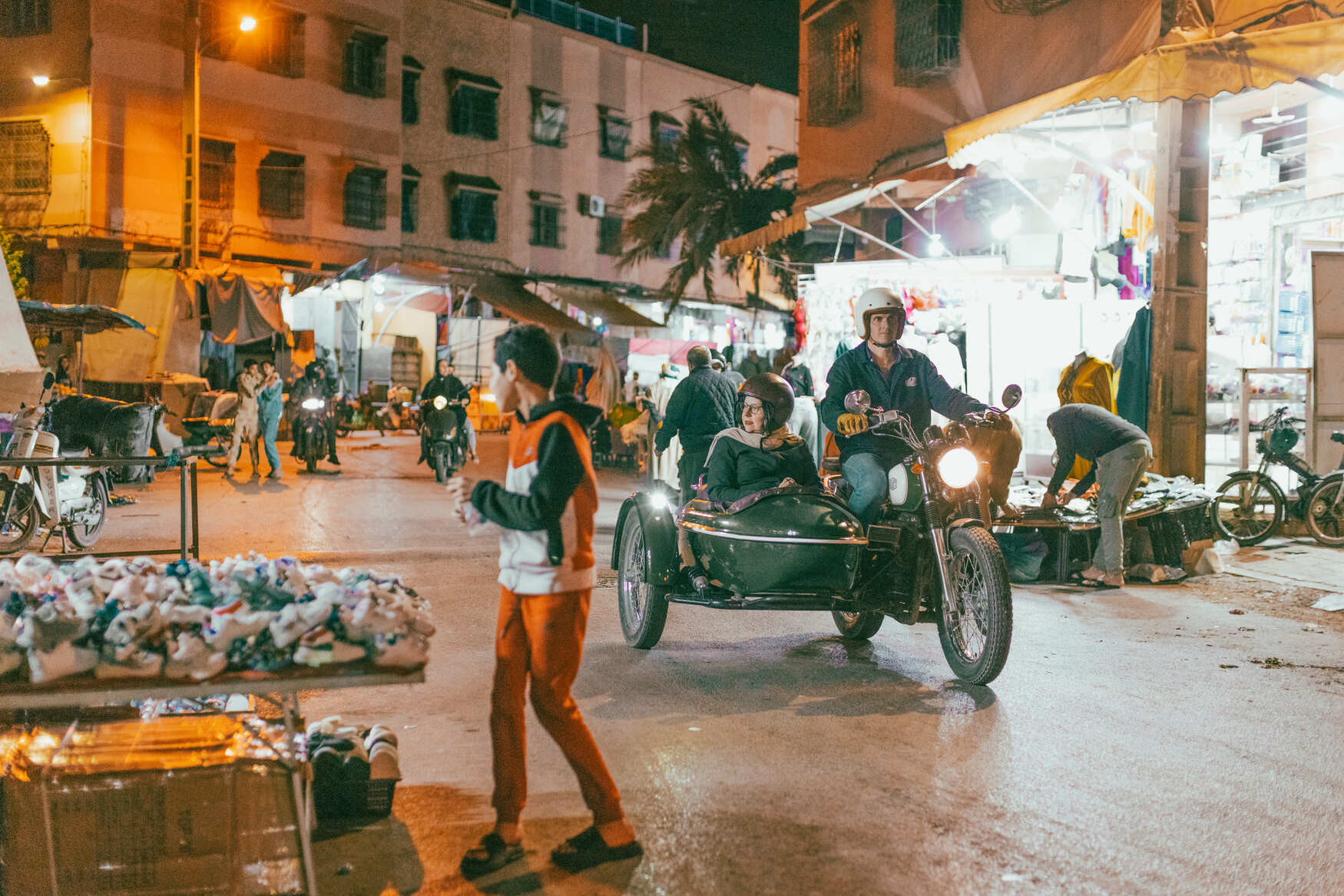
Descubre todos nuestros excursiones en Marrakech
What to pair the visit with in the district
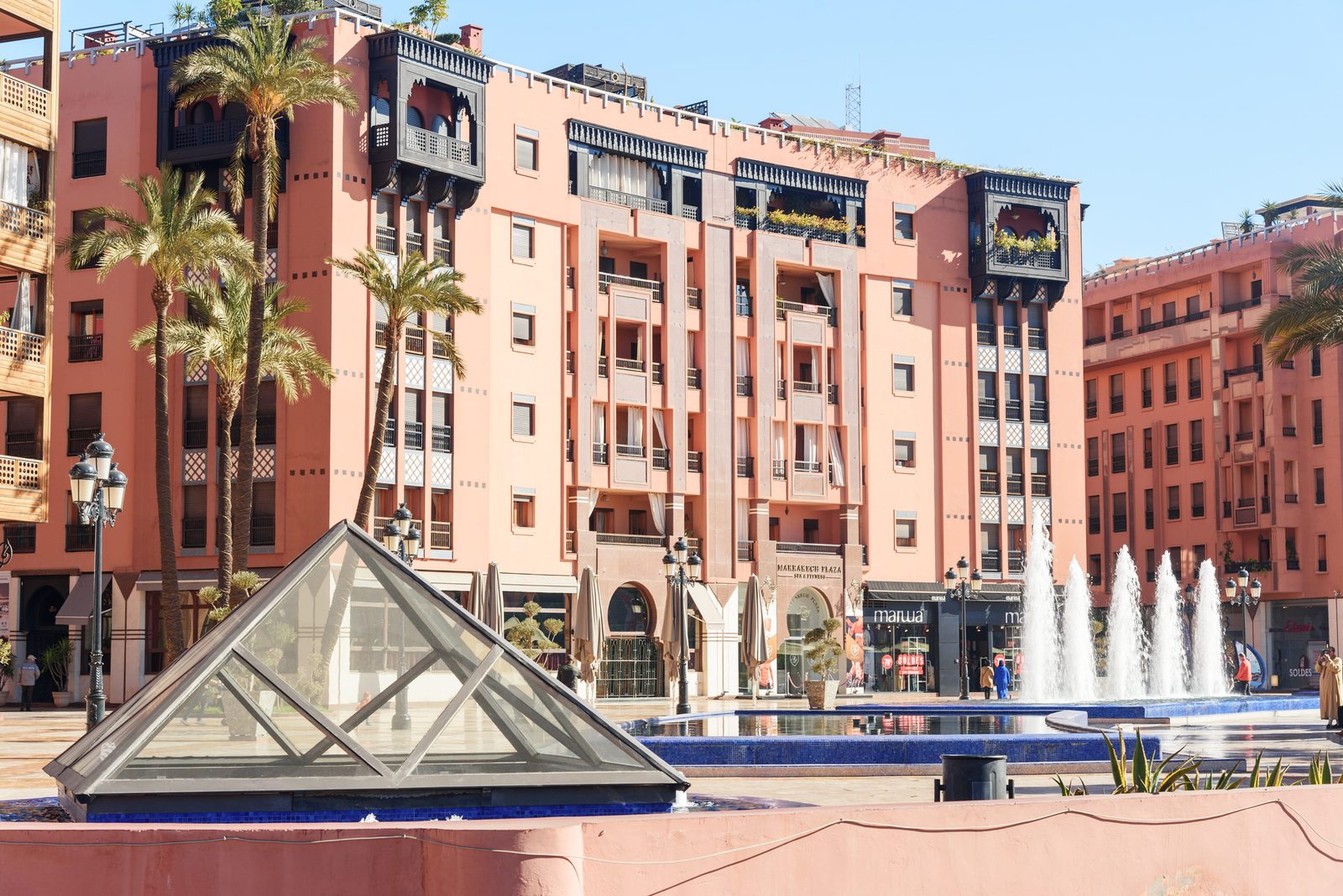
En Musée Yves Saint Laurent is just a few metres away and naturally extends the morning. Don’t leave Guéliz straight away, though: this “new town”, built under the protectorate, reveals its Art Deco architecture, galleries, shaded cafés as well as traces of its first cinema and its first hotel, and offers a completely different pace from the medina.
To better understand this district with its modern architecture and its contrasts with the medina, you can continue with the Paseo Secreto by Marrakech Insiders (3hr), which passes through the Palmeraie, modern Guéliz and the historic medina, stopping at the Art Deco façades, the Bab El Khemis flea market and the old khettaras of the palm grove. The itinerary is always discussed with your Insider to settle on the most interesting route.
If it is above all the world of Yves Saint Laurent and the bohemian jet set of the 1960s that appeals to you, opt instead for the Paseo icónico (3hr), which extends the visit towards the other addresses of that era: Dar el Hench, the House of the Serpent, the first property of Saint Laurent and Bergé in the medina; the Bab El Khemis flea market, where the couturier hunted for his objects; an Art Deco villa in the Palmeraie, home of the photographer Leila Alaoui, open only to Insiders routes; and La Trattoria, in Guéliz, decorated by Bill Willis. The garden itself is not a stop on the tour: visit it before you set off.
Which tour to choose after the Jardin Majorelle?
The garden offers a peaceful interlude, but is not enough to grasp the geography of Marrakech. Marrakech Insiders, a local operator, makes the side-car excursion its signature, with six types of tour lasting from 1hr 30 to 3hr:
- En Paseo Esencial to link the medina, Guéliz and the Palmeraie in a short time;
- En Paseo Secreto to delve deeper into these three faces of the city;
- En Marrakech Night Ride to explore the medina at nightfall;
- En Atracción infantil for an outing designed for families;
- En Sadaka Ride to discover the world of Jean-François Fourtou;
- En Paseo icónico in the footsteps of the 1960s jet set.
Each side-car takes one or two passengers. The route is led by a private Insider who speaks French, English, Spanish or Arabic and with whom the itinerary is always fine-tuned, to settle on the most interesting one; the meeting point is near Bab Doukkala, five minutes by taxi from Jemaa el-Fna.
The tours and their prices are detailed here. For a practical question — timing, availability, meeting point — WhatsApp remains the fastest way to get an answer.