
Marrakech in 2 days: at a glance
- Split your stay between the medina (Jemaa el-Fna square, souks, Bahia and Badii palaces, Koutoubia, Saadian Tombs) and the quieter neighbourhoods of Guéliz and the Palmeraie, with the Majorelle Garden and the Secret Garden. Plan to spend roughly 60% of your time in the medina, 40% elsewhere.
- Day 1 for the historic monuments of the medina, day 2 for the gardens and museums: in both cases, visits are best done early in the morning or in the late afternoon, when the light is soft and the heat eases off. The rest is covered on foot.
- Things to plan ahead: book online to avoid queuing at the ticket offices of monuments and parks, bring walking shoes, an outfit covering shoulders and knees for religious sites, and some small change for taxis.
Marrakech reveals itself through its colours, its street life and a heritage concentrated within a small area. In two days, you have to make choices: focus on one neighbourhood at a time, keep a steady rather than intense pace, and take the time to sit down between visits. The itinerary below is aimed at a family or a small group who want to see the essentials without rushing. It is built around the medina and its old town, the historic heart of one of Morocco’s great cities.
How should you organise your weekend in Marrakech?
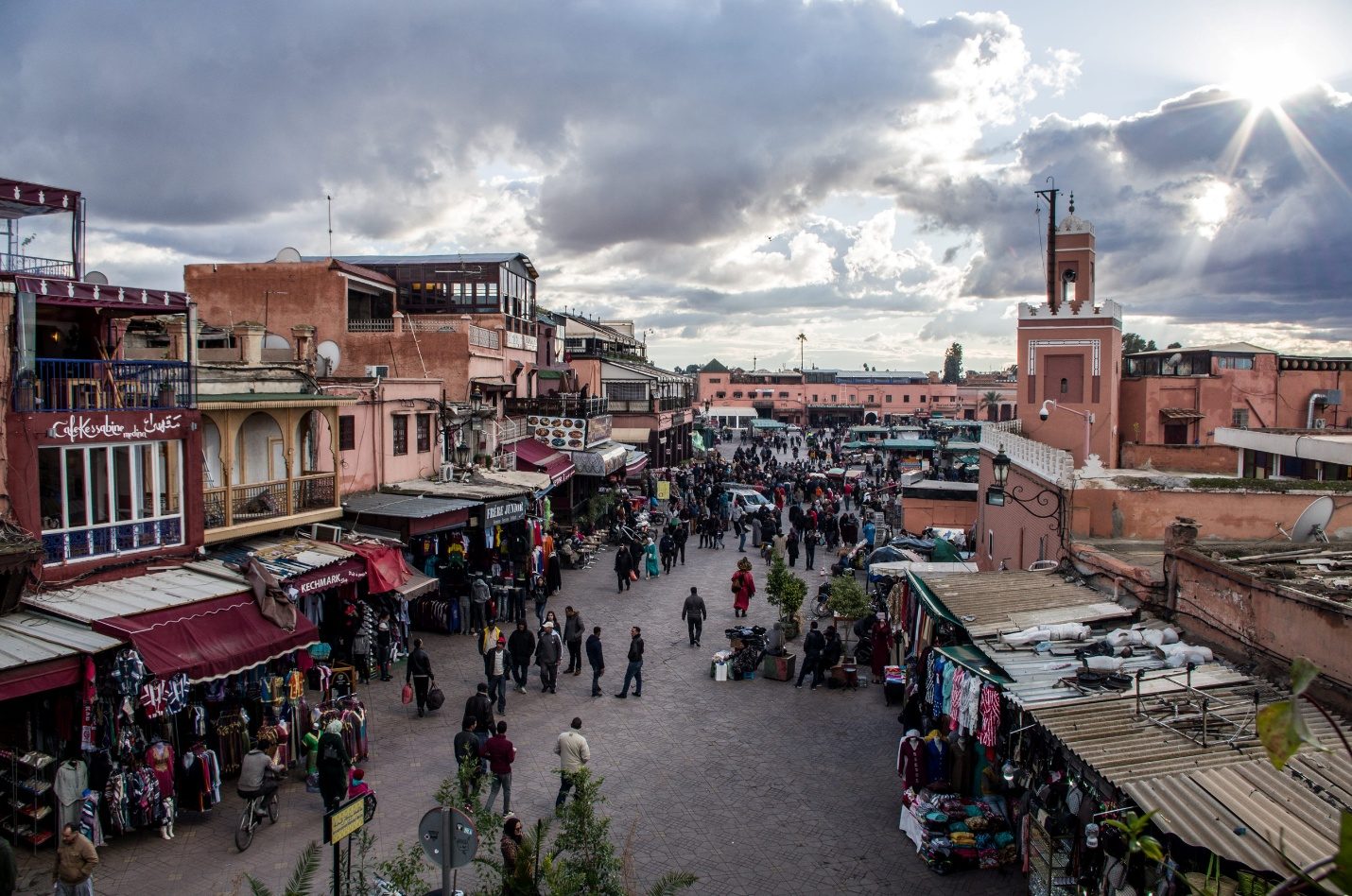
Two days are enough to see the must-sees, provided you group visits by area and keep some time to rest. The balance to aim for: a morning of focused visits, then a slower stroll, a foodie stop, a garden. That way you make progress without becoming saturated.
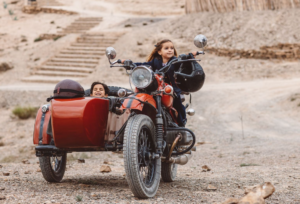
The most practical starting point is central accommodation, close to the old town: you can radiate out on foot or by short taxi rides. In the medina, a car is of no use. The lanes are often less than two metres wide and traffic is heavy on the outskirts: on foot you move faster and stay in touch with the smells of spices, the stalls and the noise of the workshops. The ideal way to get around? It is the side-car, which is why we have built our entire tour offering around this mode of transport, perfectly suited to the city and its characteristics.
To get your bearings as soon as you arrive, the Essential Ride tour by Marrakech Insiders devotes 1hr30 of side-car time to two of the three worlds that make up Marrakech, of your choice: the Palmeraie, modern Guéliz or the historic Medina. Over two days, the medina version stands out: the one where life carries on, far from the tourist thoroughfares — kasbah, Mellah, tanners’ district. The details of the route are settled at the start, vintage map in hand, according to your interests and your pace. A good way to understand the geography of the neighbourhood before setting off on foot.
What budget should you plan for these two days?
Marrakech offers real budget flexibility: for every expense, you’ll find an entry-level option and a more comfortable one, as in most tourist cities. For accommodation, a double room in a central riad or hotel starts at around €50 to €70 a night; the mid-range, between €90 and €150, often offers the best value for money (patio, well-prepared breakfast, location); high-end riads, from €200, are paid for in service, calm and amenities, not in needless extras.
When it comes to dining, the range is wide and that’s good news for the taste buds: a local snack or a fresh orange juice on Jemaa el-Fna comes to €5 to €15, a full meal in a family-run restaurant in the medina to €20 to €40 (often the best value for money), and a fine-dining table or a rooftop from €50. Finally, allow for site entry fees (palaces, gardens, museums), generally €7 to €15 per site (up to ~€20 for certain gardens or private venues), as well as a souvenir budget for the souks and markets, to be adjusted as you see fit.
How much time should you spend in each neighbourhood?
In two days, a simple split helps you avoid spreading yourself too thin:
- Medina and old town: about 60% of your time. This is where the monuments, the souks and the buzz of Jemaa el-Fna square are concentrated.
- Guéliz, a more recent and airy neighbourhood: about 20% of your time, for the art museums, the galleries and the shaded cafés.
- Gardens and the Palmeraie: about 20% of your time, to change pace and find some leafy freshness, notably at the Majorelle Garden.
The Palmeraie is the area that is hardest to cover on foot: it stretches out to the north-east of the city and is crossed by vehicle. The Secret Ride tour (3 hrs) is the only one to link the three worlds — Palmeraie, Guéliz, Medina — in a single ride, taking the time to venture into them: the khettaras, those irrigation galleries dug beneath the palm grove centuries ago, the Art Deco façades and the relics of the Protectorate on the new-town side, the Bab El Khemis flea market (closed on Fridays). Here too, the itinerary is tailored to your interests and your pace.
This split balances cultural visits and quiet moments, without trying to tick every box.
What are the must-sees of Marrakech in two days?
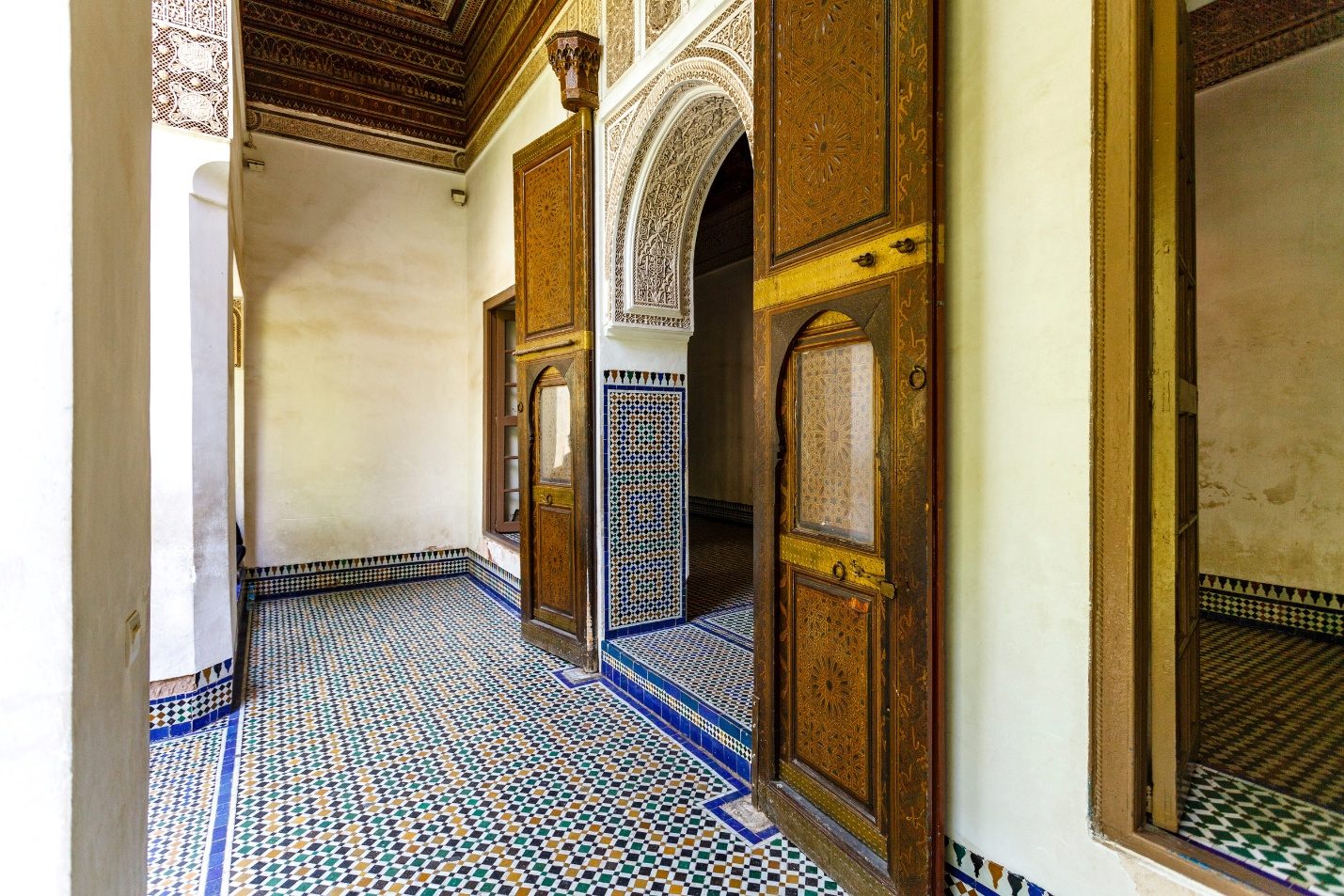
Marrakech’s major sites fit within a compact area. Here’s how to link them by proximity to limit travel, step by step.
A useful rule: alternate the types of visit (monument, market, garden, meal) to avoid weariness and to allow for breaks where you genuinely take the time to taste and observe.
Day 1: the medina and its monuments
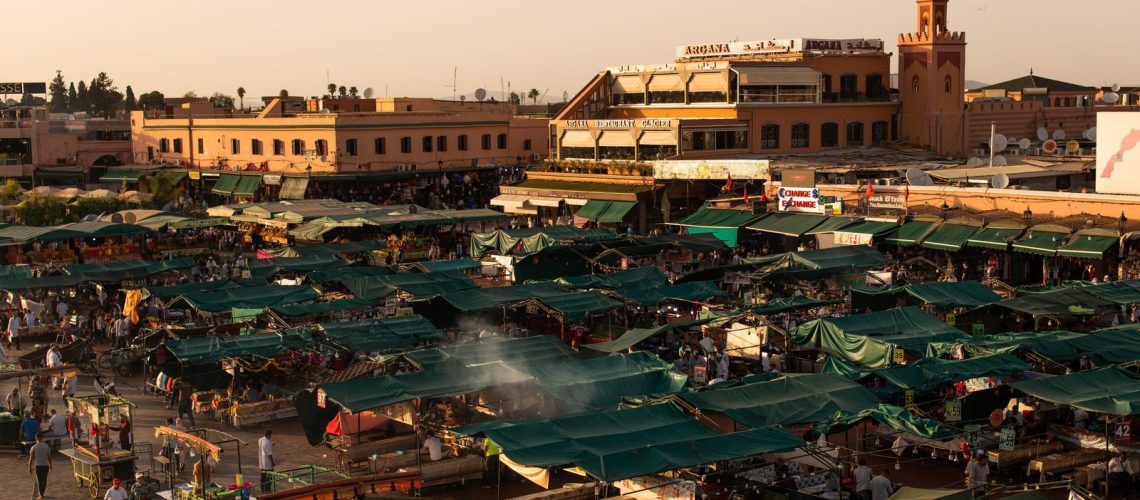
The first day focuses on the historic heart. Everything is organised around Jemaa el-Fna square, lively from the morning onwards: storytellers, street vendors, orange-juice pressers. It’s a good landmark to get your bearings and a first taste of the city’s sounds and smells.
The square changes appearance completely at nightfall, when the kitchens set up and the local crowd arrives. This is the moment followed by the Night Ride tour (1hr30): the medina by night in a side-car, with a street-food stop. An option to keep for the evening of day 1, when the monuments are closed and the city is at its liveliest.
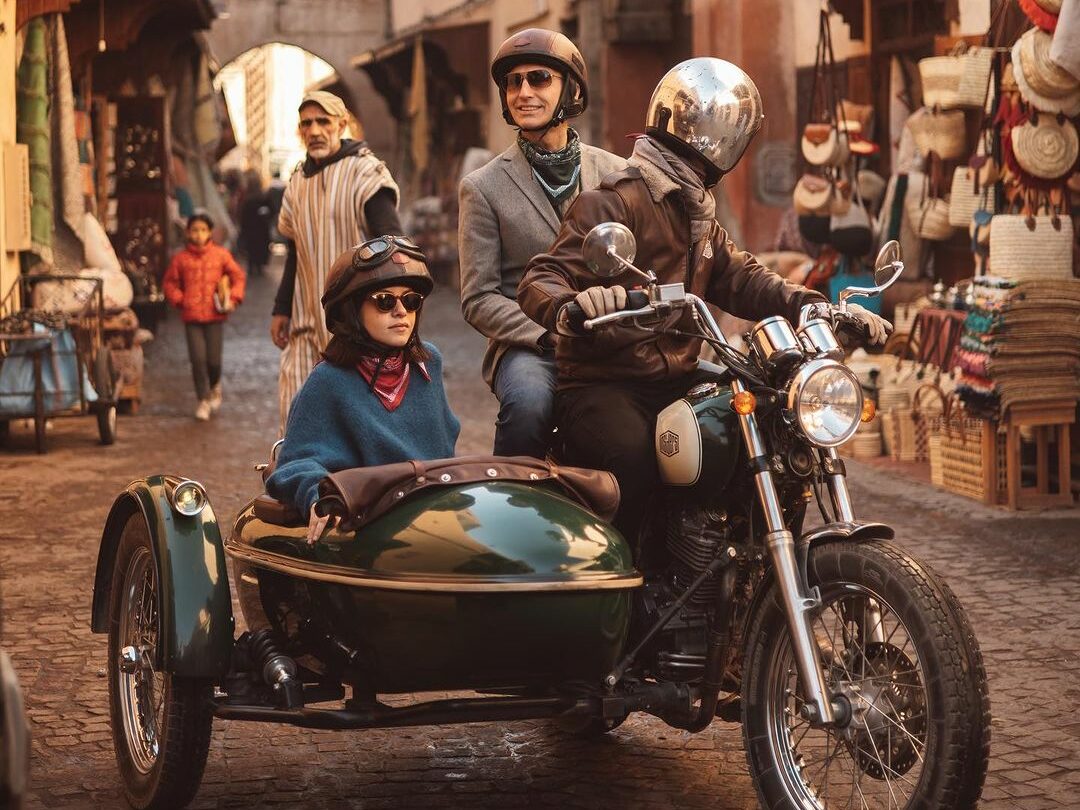
Get ready for your next adventure with our sidecar city tour of Marrakech
Then head for the souks and markets, organised by trade: spices, textiles, leather, ironwork. There you’ll find craftsmanship and plenty to take home as gifts. Haggling is part of local custom and is practised without pressure, with a smile.
Palaces and architecture
The Bahia Palace can be visited in a short hour: mosaics, planted patios, carved cedar ceilings and interior gardens give a precise sense of the 19th-century way of life. A guided visit sheds light on it, which is no bad thing given how dense the decoration is.
A few minutes away, the Badii Palace, now in ruins, is explored under the open sky. From its terraces, the view stretches over the medina and the storks’ nests perched on the ramparts. The entry fee is modest and the place lends itself well to a mid-morning break.
Memory and religious heritage
The Koutoubia Mosque and its minaret serve as a landmark from almost anywhere in the centre. The interior is reserved for Muslims, but the adjoining gardens are open to all and offer a shaded stop, pleasant in the middle of the day.
The Saadian Tombs, close by, can be visited in about thirty minutes. Their stucco and zellige decoration is remarkable, but the space is small and fills up quickly: it’s best to arrive at opening time or in the late afternoon to move around in peace.
Why explore the city’s artistic and green side?
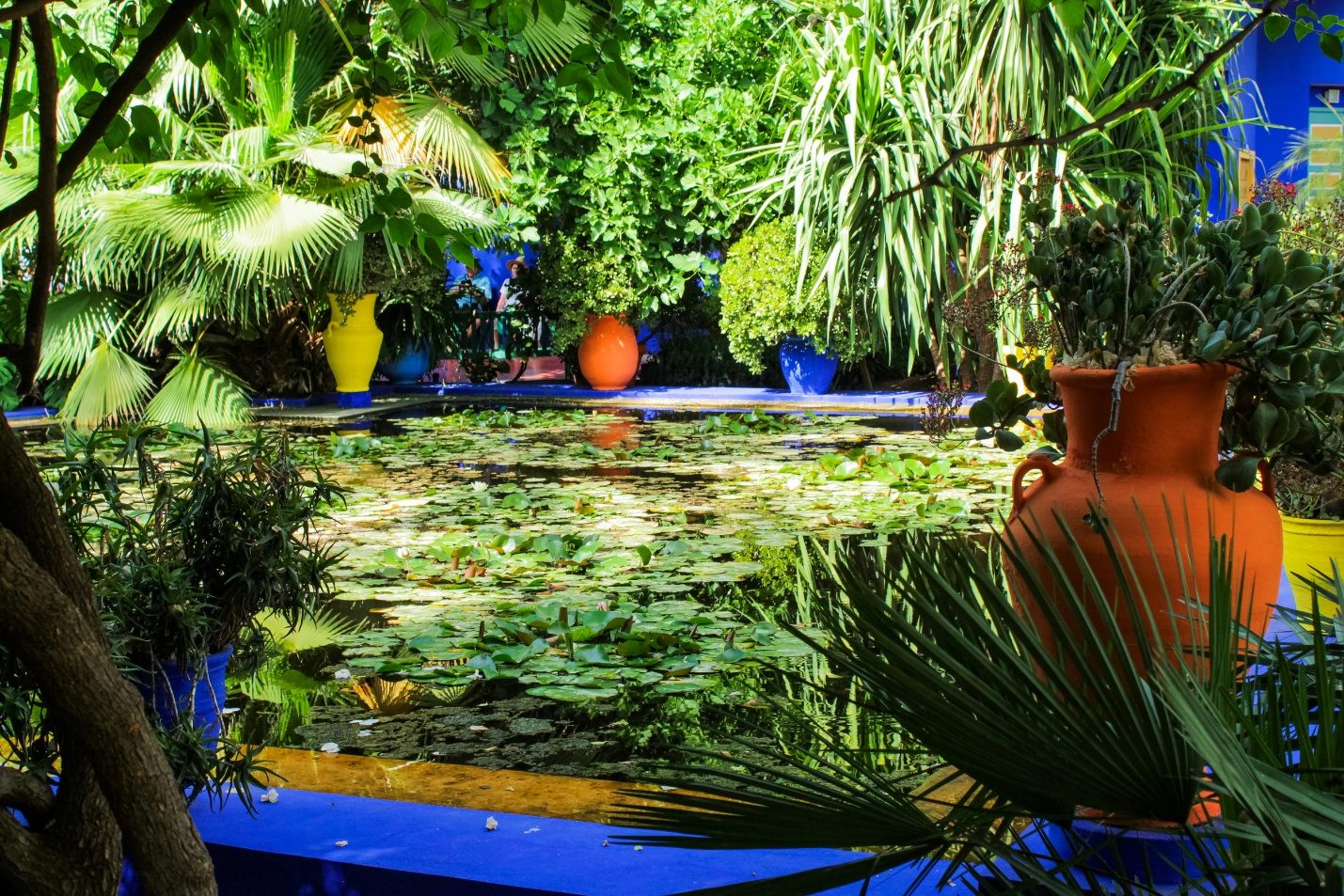
Marrakech is not limited to its palaces and the bustle of the medina. The gardens and cultural venues offer another reading of the city and provide quieter moments, useful in the middle of a short stay.
The morning of the second day lends itself well to these cultural and natural spaces, where you move more slowly, along the pathways.
Gardens: Majorelle and the Secret Garden
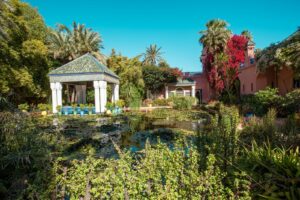
The Majorelle Garden, in the Guéliz neighbourhood, brings together plants from several continents, ponds and buildings in a distinctive blue. The site is busy: booking your ticket online and arriving at opening time avoids the wait. You can easily spend an hour there in the shade, to the sound of water and birds.
Majorelle blue belongs to a wider story: that of the 1960s, when the ochre city drew a bohemian jet set, from Saint-Laurent to Warhol. The Iconic Ride tour (3 hrs) extends the garden visit to the other addresses of that period — Dar el Hench, the first house of Saint Laurent and Bergé, the Bab El Khemis flea market, an Art Deco villa in the Palmeraie, La Trattoria decorated by Bill Willis — and gives Majorelle blue its context, something an isolated visit doesn’t convey.
In the medina, the Secret Garden offers a more intimate visit. Recently restored, it combines an Islamic garden, an exotic garden and a tower from which you look out over the rooftops. It’s a peaceful interlude, to be enjoyed unhurriedly before heading back into the bustle of the lanes.
Museums and art houses
Marrakech has several museums and art houses spread between the medina and Guéliz. The Maison de la Photographie, in the old town, brings together old photographs of Morocco and has a rooftop café. Several galleries showcase the contemporary scene, sometimes tucked away in a lane of the medina.
As a family, some museums offer workshops or child-friendly trails. Programming varies: it’s best to check the opening times in advance or enquire on site to plan the visit.
With children, two tours are designed for that age: the Kids Ride (1hr30), with its photo stop among the camels of the Palmeraie and its ice-cream break on the way back through the medina, and the Sadaka Ride (3 hrs), which crosses the medina and the Palmeraie to Dar El Sadaka, a private sculpture park closed to the public and belonging to the French artist Jean-François Fourtou — “The House Fallen from the Sky”, “The Giant’s House”. Enough to fill half a day without having to negotiate every step.
What authentic experiences can you have in Marrakech in two days?
A short stay isn’t just a list of sites. It’s also a chance to take part in moments of local life and to interact with the inhabitants, provided you set aside time for it.
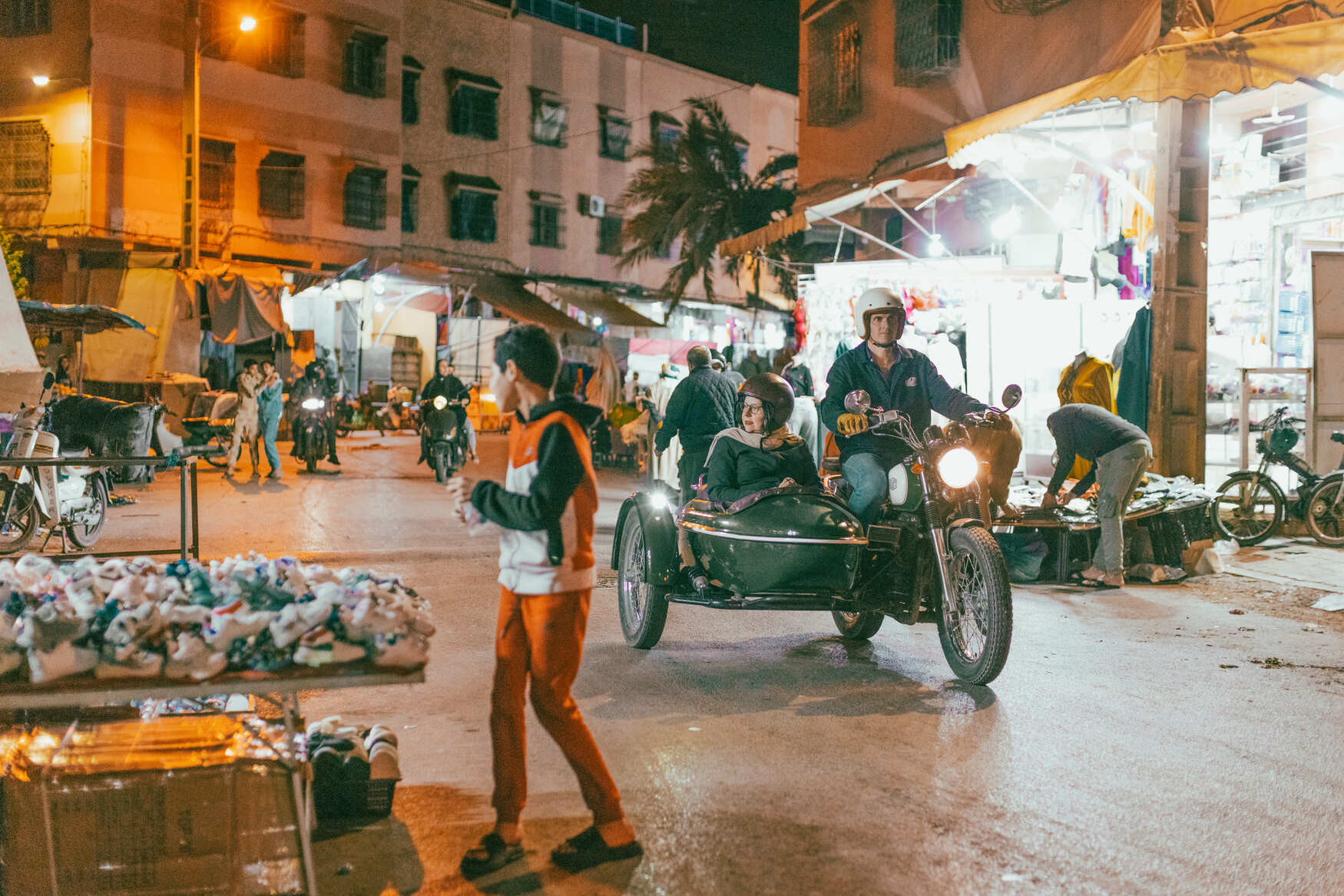
Discover all our Marrakech excursion rides
For this, it’s better to choose a few experiences and live them fully rather than pile up more at a rushed pace.
The Moroccan table, from street snack to cookery class
The cuisine is one of the great pleasures of the stay, and it comes in every budget. On a rooftop in the old town or on a terrace, you can taste couscous, slow-cooked tagines and pastilla, amid sweet-and-savoury flavours, cinnamon and saffron. The family-run restaurants of the medina serve generous cooking; the street-food stalls near the ramparts, at the end of the day, let you sample skewers or soups for a few euros.
To go further, a Moroccan cookery class teaches you to prepare a tagine or mint tea, poured from a height to create the froth. It’s a hands-on way to understand the gestures and the spices, and a moment of exchange enjoyed by young and old alike. Lingering over the meal with a cup of tea is part of the local rhythm: you don’t leave the table straight away.
The Ben Youssef Madrasa
The Ben Youssef Madrasa, a former Quranic school in the medina, is worth visiting for its architecture: central courtyard, carved wood, zelliges and plays of light. The atmosphere there is calm, in contrast with the bustle of the neighbouring souks.
You move through the rooms and the old prayer courtyard, taking the time to read the decoration. The space is photogenic, but it is best appreciated when explored slowly, early in the morning when there are fewer visitors.
What practical tips will help you optimise your stay in Marrakech?
Two days in a dense city call for a minimum of organisation to enjoy every stage without tiring out the whole group. Here are the useful pointers to set up your programme.
The key point remains managing the heat (in summer): favour visits early in the morning or in the late afternoon, and reserve the hottest hours (1pm – 4pm) for a break in a riad, a shaded café or, if your accommodation allows, the pool. You get on better by respecting this rhythm.
| Experience not to miss | Best time | Logistical tip |
|---|---|---|
| Jemaa el-Fna square | End of day / evening | Arrive before sunset, when the square comes to life and gradually lights up. Juices and snacks from €5 to €15. |
| Palaces (Bahia, Badii) | Early morning | Buy tickets in advance if possible and start with the furthest site. Entry from €7 to €15 per site (up to ~€20 for certain gardens or private venues). |
| Souks and markets | Mid-morning or end of day | Spot the main thoroughfares and a few visual landmarks to find your way. Shopping budget up to you. |
| Gardens (Majorelle, Secret Garden) | Before noon | Book online, bring water and a hat: the sun is strong at that time. Entry from €7 to €15 per site (up to ~€20 for certain gardens). |
| Restaurants and local tables | Lunch or dinner | Vary the formats to taste a bit of everything: street food (€5–15), family canteen (€20–40), fine-dining table (€50+). |
Bring comfortable shoes: you walk a lot, even with a measured programme. A small bag is enough for water, a chèche and your camera. Keep some small change for taxis or the occasional bus; the distances are short, but the heat tires you quickly.
You can buy something to snack on directly from the traders to save time. Finally, respect places of worship and adapt your dress when visiting historic monuments and religious ones.
Fancy an itinerary already mapped out for these two days?
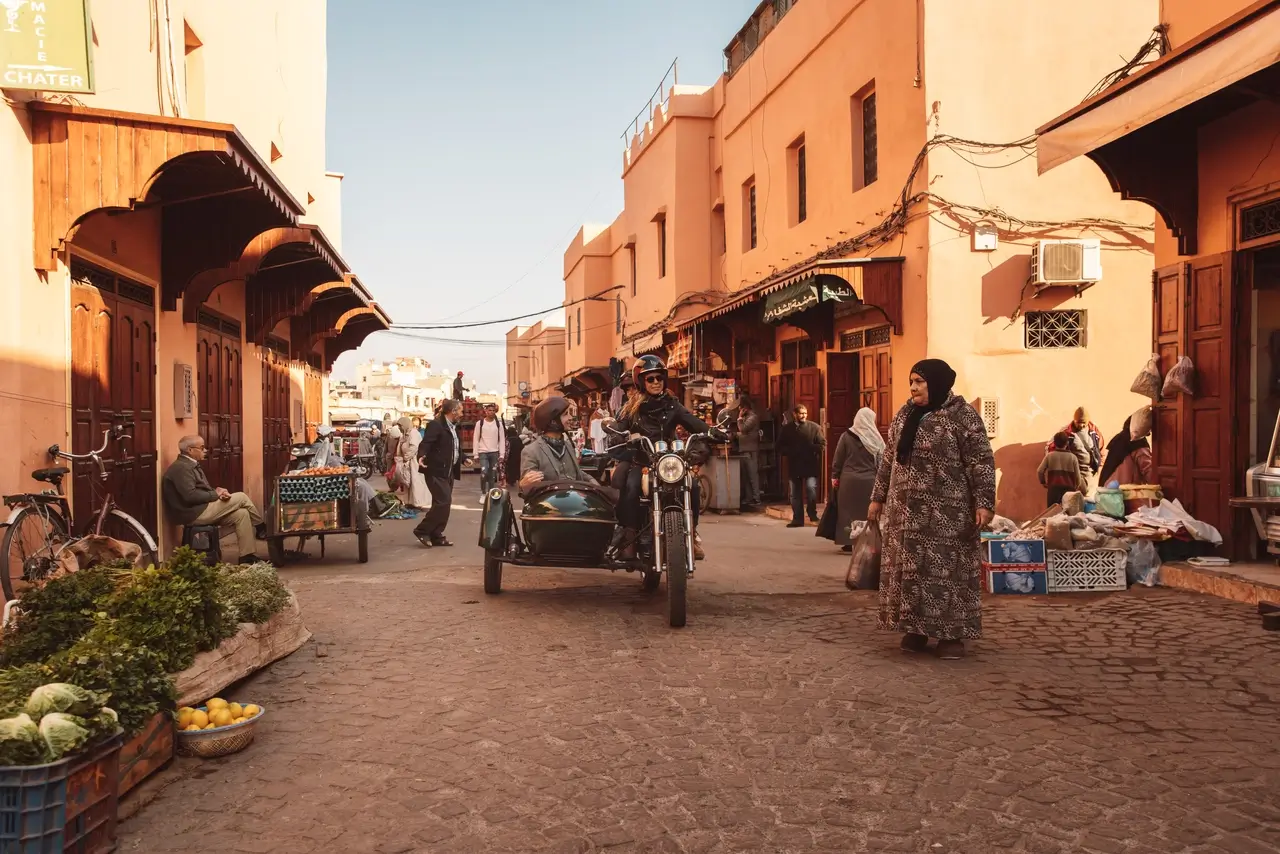
Two days in Marrakech leave little room for improvisation: the order of visits, managing the heat and getting around the medina save precious time when they are prepared in advance. This is where Marrakech Insiders comes in, a local operator based on the spot: excursions in and around Marrakech, all by side-car — its signature — to link the neighbourhoods differently and see the city from an angle that walking doesn’t give.
Six tours make up the offering, from 1hr30 to 3 hrs, each with its own route: the medina by night, the Palmeraie as a family, two of the city’s three worlds of your choice in 1hr30 or all three in 3 hrs, the world of Jean-François Fourtou, the haunts of the sixties jet set. On the Essential and the Secret Ride, the details of the itinerary are decided at the start, map in hand, according to your interests and your pace. Each side-car takes one or two people with a private pilot, who speaks French, English, Spanish or Arabic; the meeting point is near Bab Doukkala, a five-minute taxi ride from Jemaa el-Fna. The six itineraries and their prices are detailed here: simply choose the one that best complements your programme and book your slot. For a practical question — a time, a meeting point — WhatsApp remains the quickest.