
Palais El Badi: at a glance
- Built from 1578 onwards by the Saadian sultan Ahmed al-Mansour with Carrara marble and gold from Timbuktu, El Badi means “the Incomparable“.
- Stripped of its materials a little over a century after work began, by Moulay Ismaïl to build the city of Meknès, it still retains its rammed-earth walls, its esplanade, its pools and the precious minbar of the Koutoubia.
- Allow about 1 hour, more with the minbar and the underground spaces. The site offers very little shade: favour the morning or late afternoon.
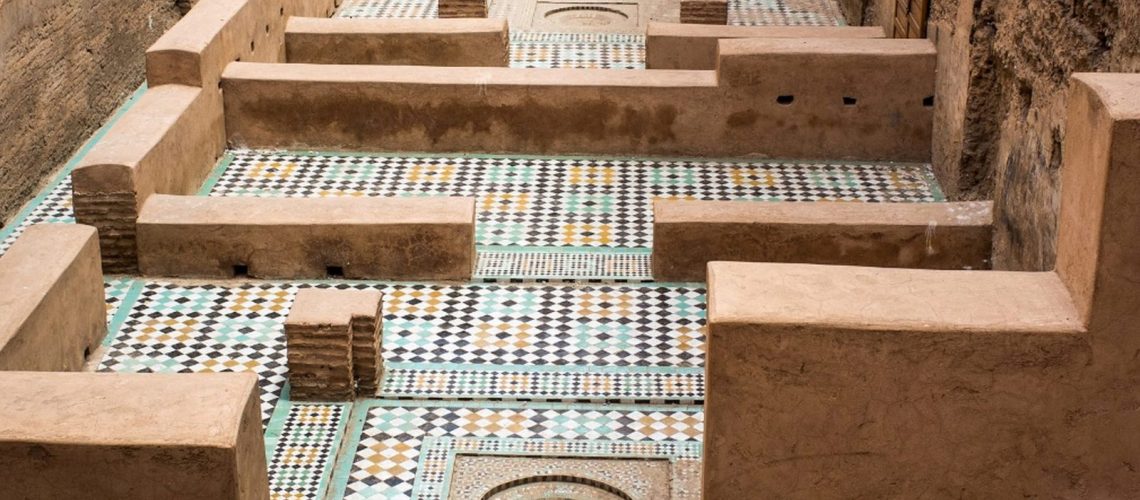
Palais El Badi impresses precisely because of what it no longer shows. Of what was, at the end of the 16th century, one of the most sumptuous palaces in Morocco and the Muslim world, all that remains are rammed-earth walls, a vast esplanade and empty pools where storks nest. One hour of visiting is enough to grasp its past scale. You can then better understand this heritage and place it within the history of Morocco with the Paseo Secreto side-car tour by Marrakech Insiders.
The history, in three phases
The construction: a palace paid for by a victory
The Saadian sultan Ahmed al-Mansour launched the work in 1578, the year of the Battle of the Three Kings, a victory that earned him his nickname “al-Dhahabi”, the Golden One. The palace, intended to display the power of the dynasty, was financed by Portuguese ransoms and by the gold that came from Sudan after the conquest of Timbuktu.
The materials were imported from afar: Carrara marble, onyx, gold, cedar wood. Tradition has it that the Italian marble was exchanged for its weight in Moroccan sugar. The name given to the building, El Badi, means “the Incomparable”, which also refers to one of the divine names in the Muslim tradition.
The heyday: a ceremonial palace
El Badi was not a residence but a place of reception, designed to receive ambassadors and dignitaries. The central esplanade, more than one hundred and thirty metres long, was arranged around a large pool and sunken gardens planted with orange trees, framed by pavilions.
This grandeur still strikes visitors today: rather than moving from room to room, you cross a monumental courtyard bordered by high walls of red earth.
The destruction: a palace taken apart
Less than a century later, the Alaouite sultan Moulay Ismaïl had El Badi taken apart to transport its materials to his new capital, Meknès. The demolition work is said to have lasted years. The walls, foundations and pools that remain therefore form the skeleton of a palace deliberately stripped bare, then altered by time.
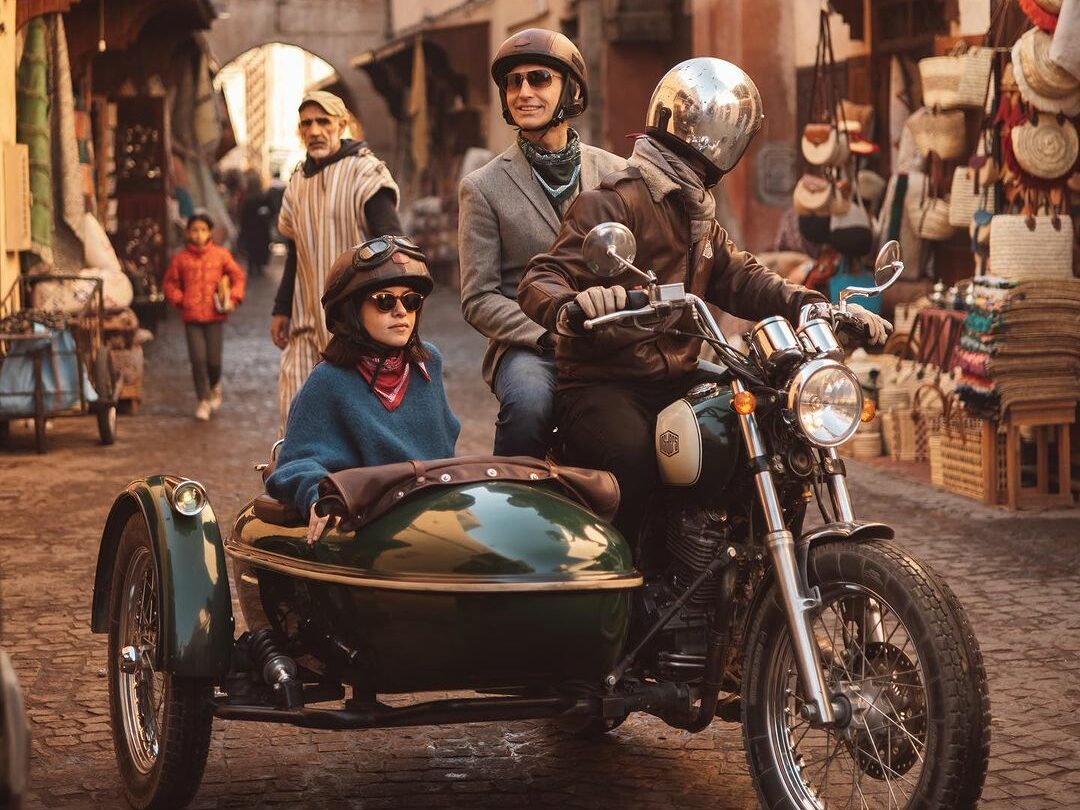
Prepárate para tu próxima aventura con nuestras excursiones en sidecar en Marrakech
What you see today
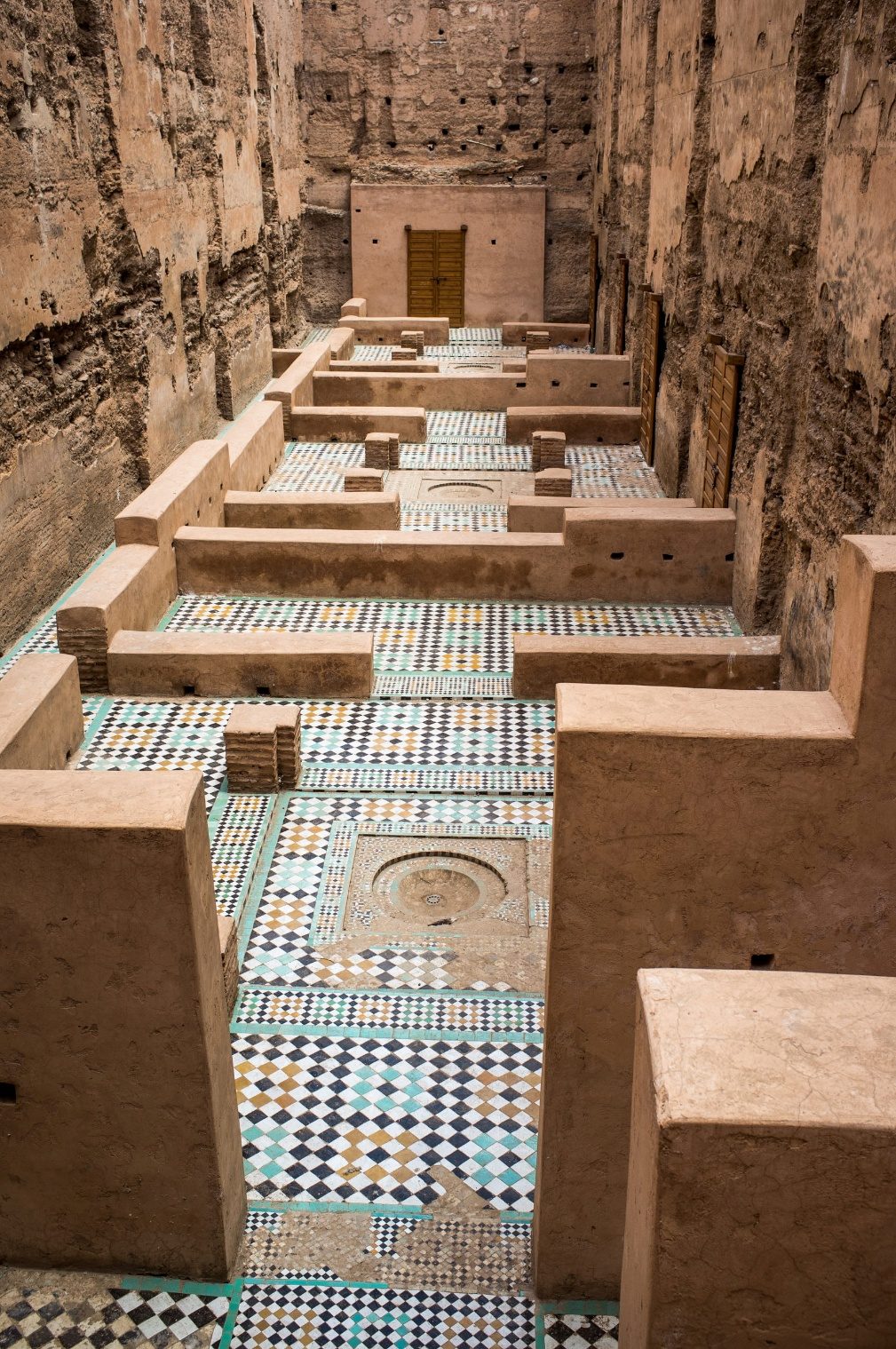
- The esplanade and the pools: the heart of the site, open to the sky, with the sunken orange-tree gardens and the large central pool.
- The ramparts and the terraces: some high points offer an overall view of the palace, the rooftops of the medina and, when the sky is clear, the peaks of the Atlas.
- The storks: they nest at the top of the walls and occupy the site all year round. They have become one of the iconic images of El Badi.
- The underground spaces: former stables and vaulted storerooms, cooler than the esplanade, round off the route when they are accessible.
- The minbar of the Koutoubia: the pulpit from which imams deliver the sermon in a mosque, dating from the 12th century. This masterpiece of marquetry made in Córdoba is on display in a pavilion on the site. Take the time to see it: visitors in a hurry easily walk past this major piece.
Planning your visit
| Point | Guideline |
|---|---|
| Duración | 1 hour, 1 hr 30 with the minbar and the underground spaces |
| Admission | At the lower end for the city’s sites, €7 to €15 |
| Best time slot | At opening in the morning, or after 4 pm |
| To combine with | The Bahia Palace and the Mellah, both nearby |
The main thing to watch out for is the almost complete lack of shade at the site. The esplanade is entirely open, the walls radiate the heat, and a visit between 1 pm and 4 pm from June to September can be genuinely gruelling. Come early or in the late afternoon: it is also at these hours that the low, raking light gives the rammed-earth walls their most intense colour, ideal for photos.
Bring water, a hat and sturdy shoes: the ground is sometimes stony and some staircases are uneven. Also check the opening hours and access conditions before your visit.
Con niños
El Badi works surprisingly well with children, better than richly decorated palaces: there is space to run around, storks to watch up high, underground spaces to explore and ramparts to climb.
Stay attentive, however, near the ramparts, the pools and the high points, and plan your breaks before heading onto the esplanade, where shade is lacking. A one-hour visit in the morning is the right format.
To extend the day in a more playful vein, the El Kids Ride side-car tour by Marrakech Insiders links the medina to the Palmeraie with a pace and a route designed for families.
El Badi or the Bahia?
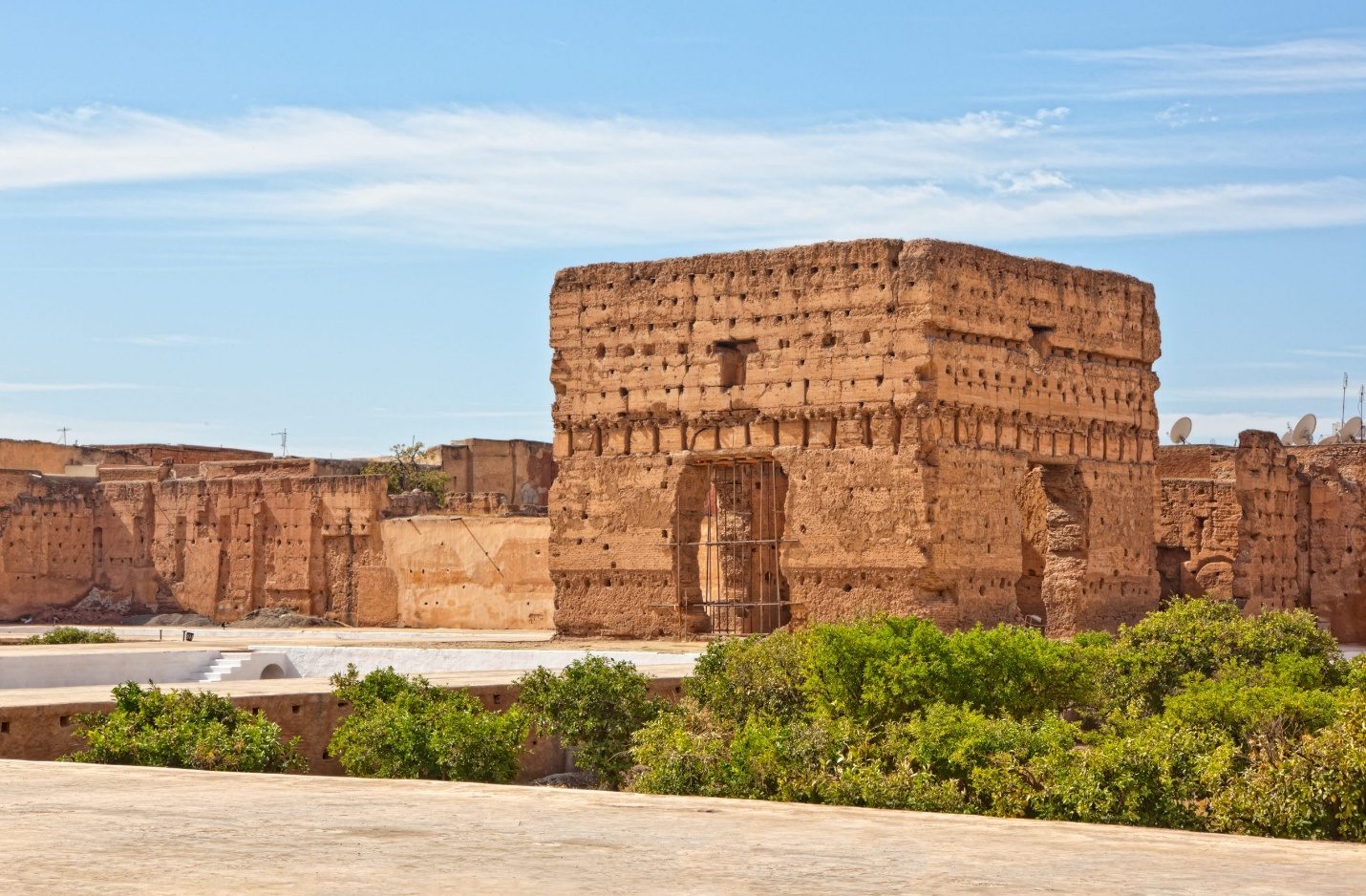
The two palaces are neighbours and complement one another more than they resemble one another. The Palacio de la Bahía, from the 19th century, is intact: planted patios, zellige, painted cedar ceilings. It reveals the decor and the art of living of a court residence in Morocco. El Badi is its exact opposite: empty, monumental, mineral, it tells of power and its disappearance.
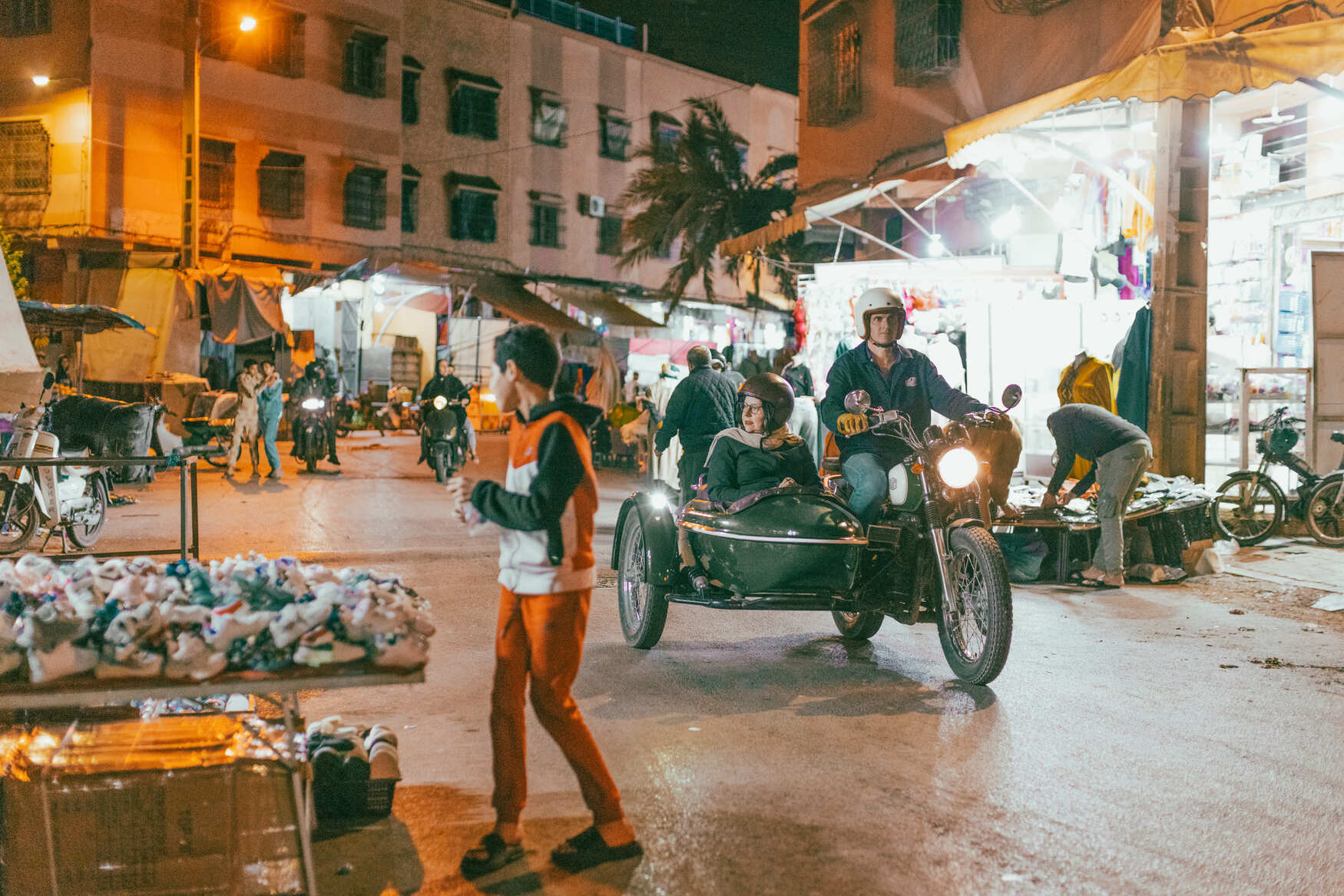
Descubre todos nuestros excursiones en Marrakech
If you have to choose just one, go for the Bahia for the richness of its decor and its Islamic art, El Badi for the atmosphere, the history and the viewpoints. Over a half-day, the two follow on naturally, starting with El Badi in the morning, for the shade, and finishing with the Bahia.
A city that can be read in its ruins
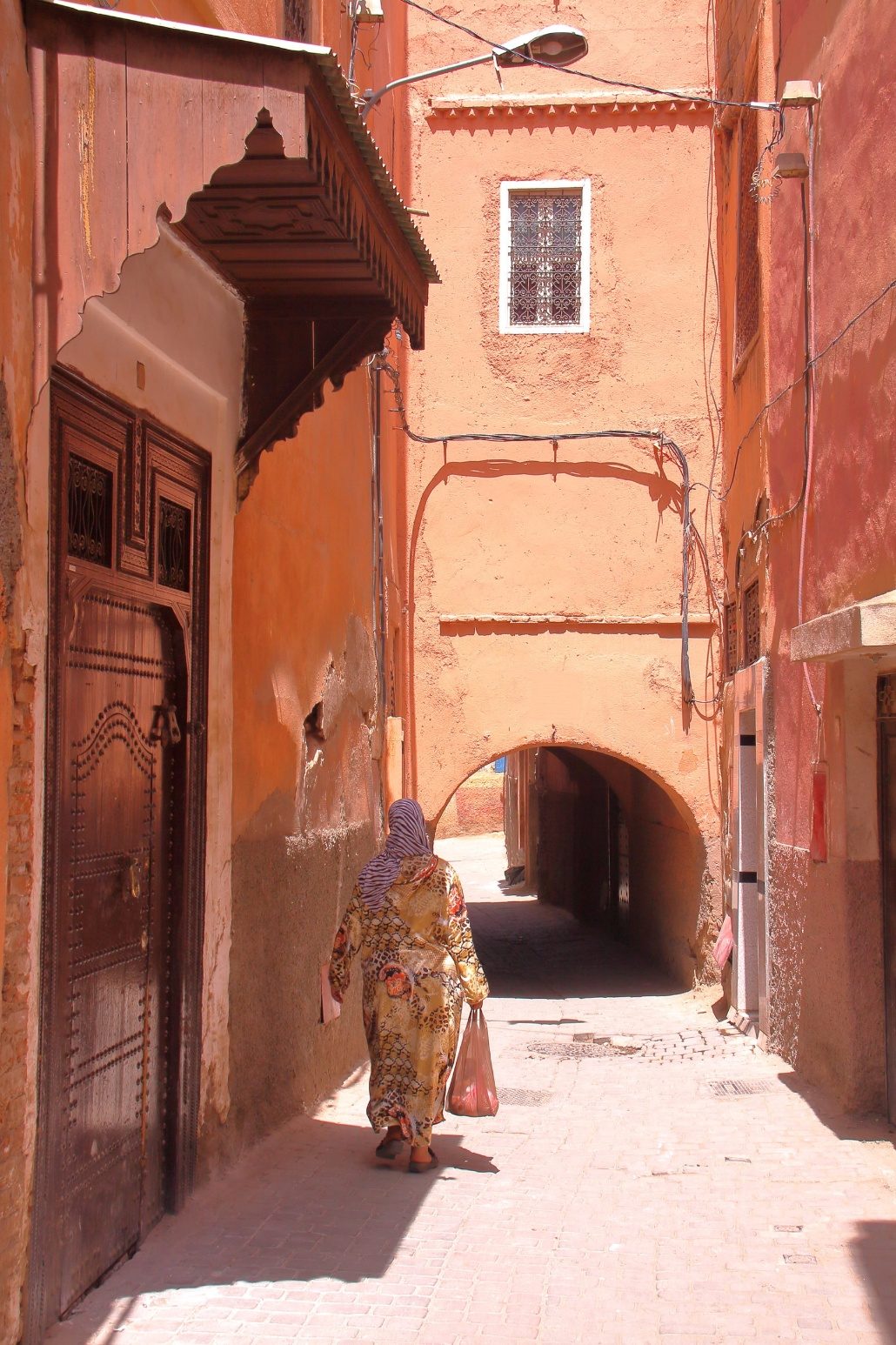
El Badi, the Saadian Tombs and the Koutoubia, whose mosque minbar is kept in the palace, make it possible to follow several centuries of history in the south of the medina. These sites speak to one another, and reaching them through the alleyways of the Mellah, between places of worship, domestic architecture and the jewellers’ souk, lets you extend this urban discovery.
En Paseo Secreto tour by Marrakech Insiders (3 hrs) crosses that Marrakech, between the Palmeraie, the modern Guéliz and the historic Medina, around the kasbah, the Mellah and the tanners’ quarter, with an itinerary always discussed with your Insider to settle on the best route according to your interests: Islamic art, hidden places, architecture, culture, and so on.
For a shorter format, the Paseo Esencial (1 hr 30) lets you discover different faces of Marrakech, passing through the non-touristy medina, kasbah and Mellah included.
Los tours y sus precios están detallados aquí. For a practical question, WhatsApp sigue siendo el más rápido.