
Marrakech suitcase: at a glance
- The continental climate calls for layering and favouring natural materials (cotton, linen): the difference between morning and afternoon can reach as much as 15°C.
- Each season has its own rule: light layers in spring/autumn, loose, light-coloured clothing in summer, a proper coat in winter as the riads of the medina are sometimes barely heated.
- Favour closed shoes that are already broken in (you may cover 8 to 10 km/day on cobblestones), and don’t forget three essentials: a scarf, a water bottle and cash.
Packing your suitcase for Marrakech means taking three constraints into account: a climate that varies from 12°C in January in the early morning to more than 40°C in July, a city where you walk a great deal on uneven surfaces, and customs that invite you to cover shoulders and knees out of respect in the medina (which, moreover, apply throughout the country). Here is what to bring depending on the season and your activities, what proves genuinely useful and what needlessly clutters your luggage. If you are planning one of the Marrakech Insiders tours, a few tips specific to the side-car also await you at the end of the article.
The rule that applies all year round: the temperature range
Marrakech is a continental city, not a seaside one. The differences in temperature between the early morning and the afternoon are marked: they commonly reach 15°C and can be greater in winter. A February day may start at 8°C and peak at 22°C; a July night drops back to around 20°C after an afternoon of more than 40°C.
The most effective strategy is therefore to layer up, rather than to rely on a single layer. A t-shirt, a light shirt over it, and a thin jumper or a jacket that stays in the bag during the day cover almost every situation.
Another principle valid all year round: natural materials. Cotton and linen breathe, whereas synthetics cling as soon as it gets hot and can quickly become uncomfortable after three hours in the souks.
Season by season
Spring, from March to May
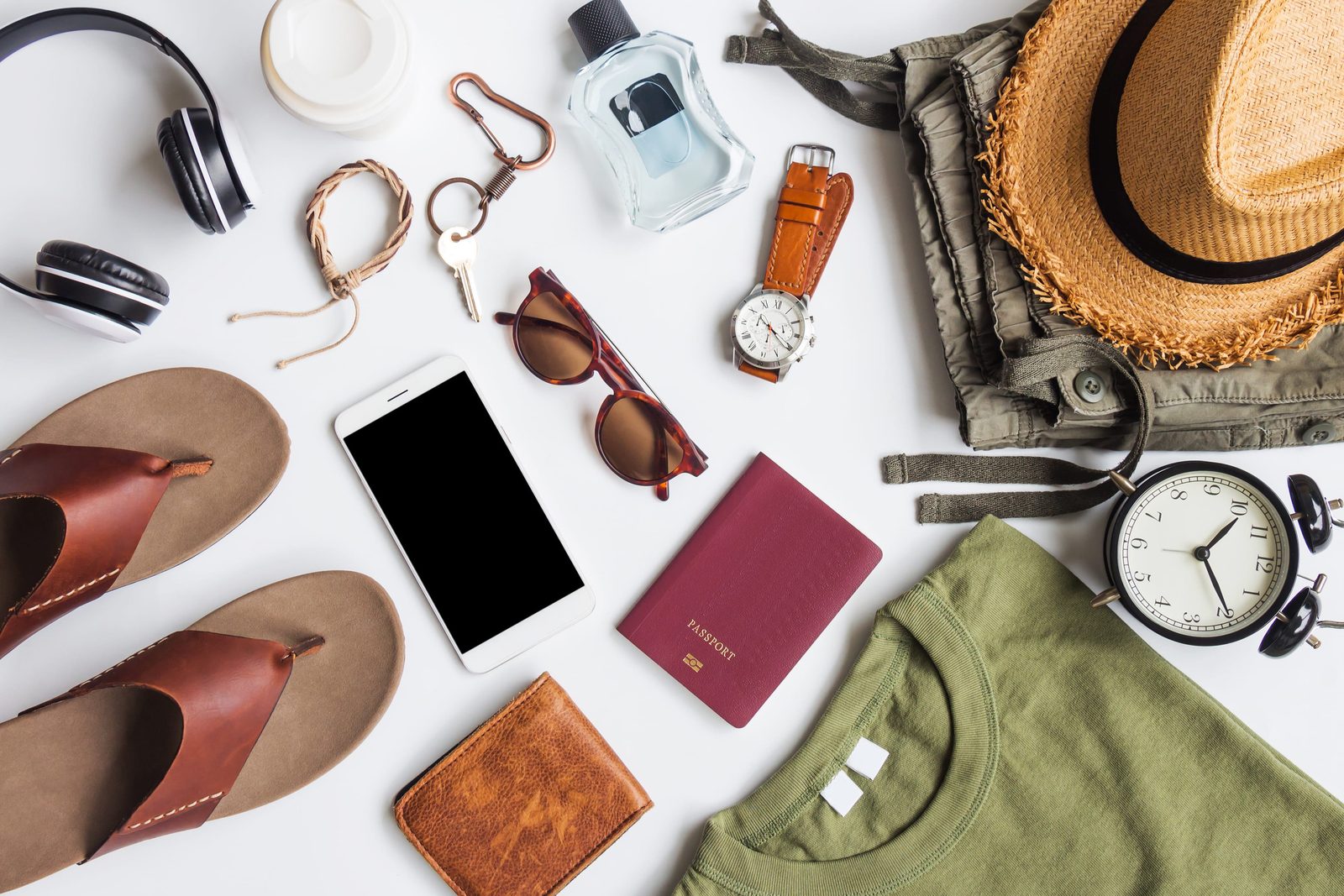
Often considered the best time to visit Morocco, it is also the simplest to prepare for: expect 20 to 28°C in the afternoon and cool mornings. Bring lightweight tops with short and long sleeves, light trousers, a long dress or a skirt for women, and a thin jacket for the morning and evening. Showers remain possible in March and April: a compact windbreaker is enough, a raincoat is superfluous.
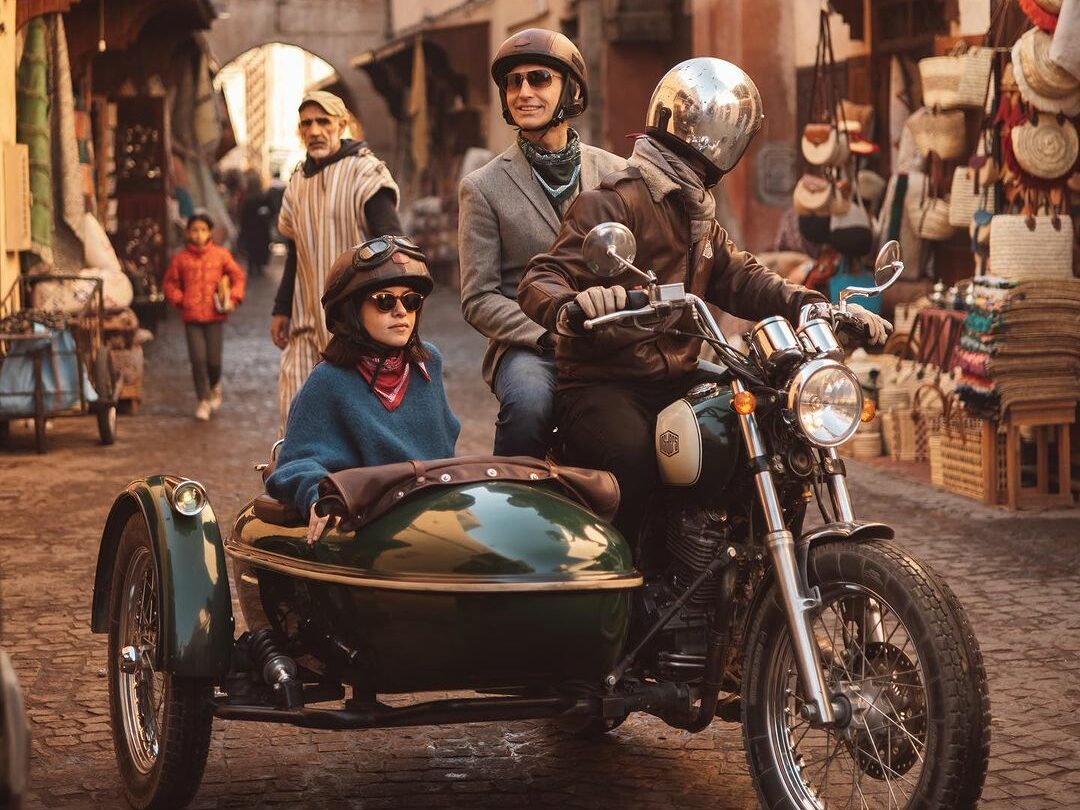
Get ready for your next adventure with our sidecar city tour of Marrakech
Summer, from June to September
The hottest month regularly exceeds 40°C in the afternoon, with a dry heat. The right strategy may seem counter-intuitive: cover up more, not less. A loose, light-coloured cotton garment protects better from the sun than a vest top, while respecting local customs.
Pack loose clothing in light colours, a wide-brimmed hat rather than a simple cap, sunglasses, and a swimsuit. Between 1 pm and 4 pm, it is best to slow the pace, staying by a pool or in a shaded patio. A light scarf remains useful in the evening on the terraces, when the wind picks up. In high summer, to explore the city at a gentler hour, the Marrakech Night Ride offers a private 1.5-hour outing at nightfall, between the Hivernage and the medina.
Autumn, from October to November
The conditions are close to spring, with days still hot in October and evenings that cool markedly in November. Take the same clothing base as in spring, adding a proper jumper for the end of the day.
Winter, from December to February
This is often the least well anticipated season. The days are mild and sunny, between 18 and 22°C, but the mornings and evenings can be cold, around 8 to 12°C. What’s more, the houses of the medina are barely heated or not at all: it is often cooler in a patio than outdoors in full sun.
Bring a proper coat or a warm jacket, a jumper, socks, and something to sleep warmly in. The sun remains strong at midday: so keep the sunscreen in your bag. If you head up into the Atlas, add even a fleece and a hat, as temperatures can drop below zero at altitude.
Footwear, the real subject
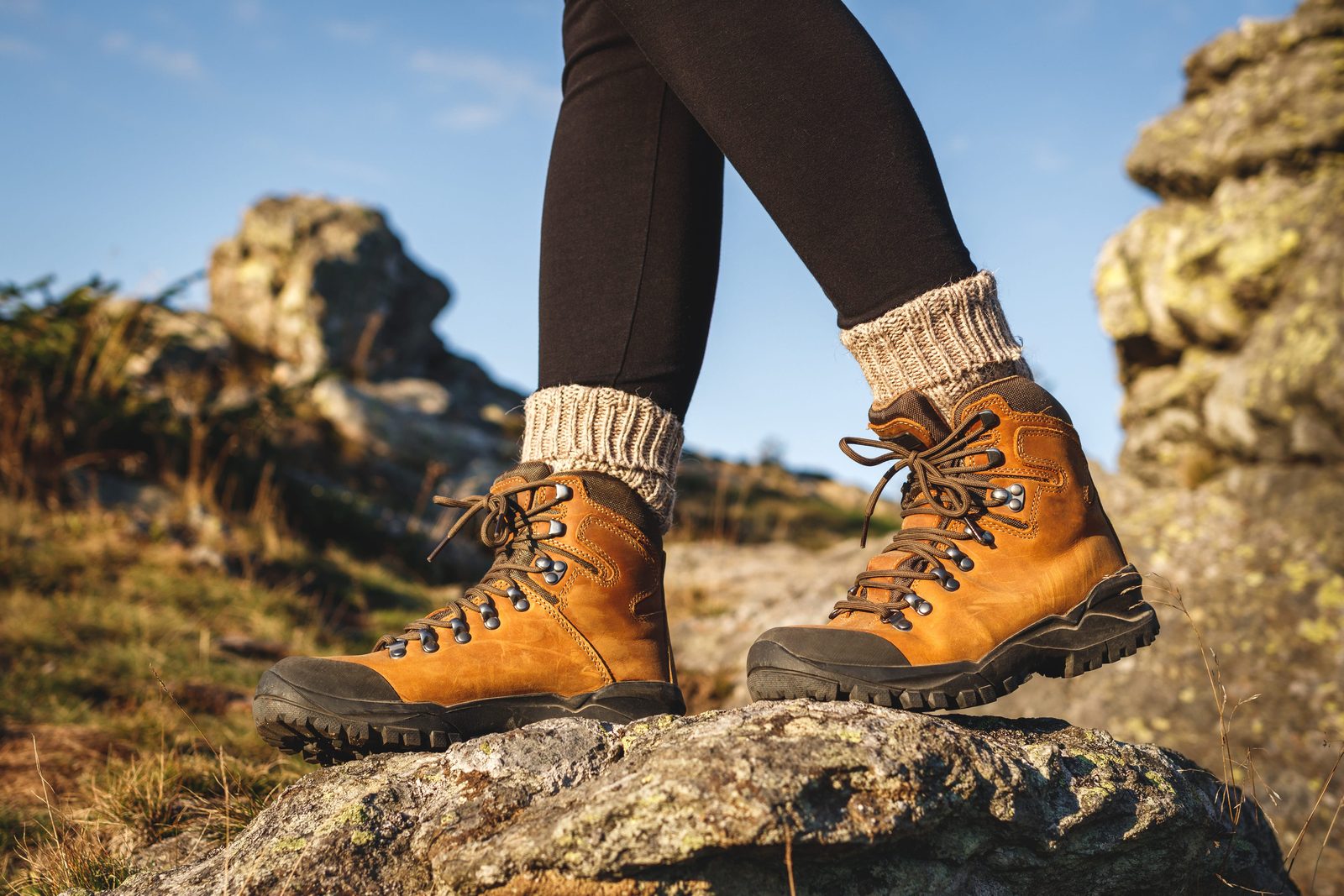
This is the detail where a mistake can spoil a stay. The alleys of the medina are cobbled, uneven, sometimes damp near the stalls, and you easily walk eight to ten kilometres a day.
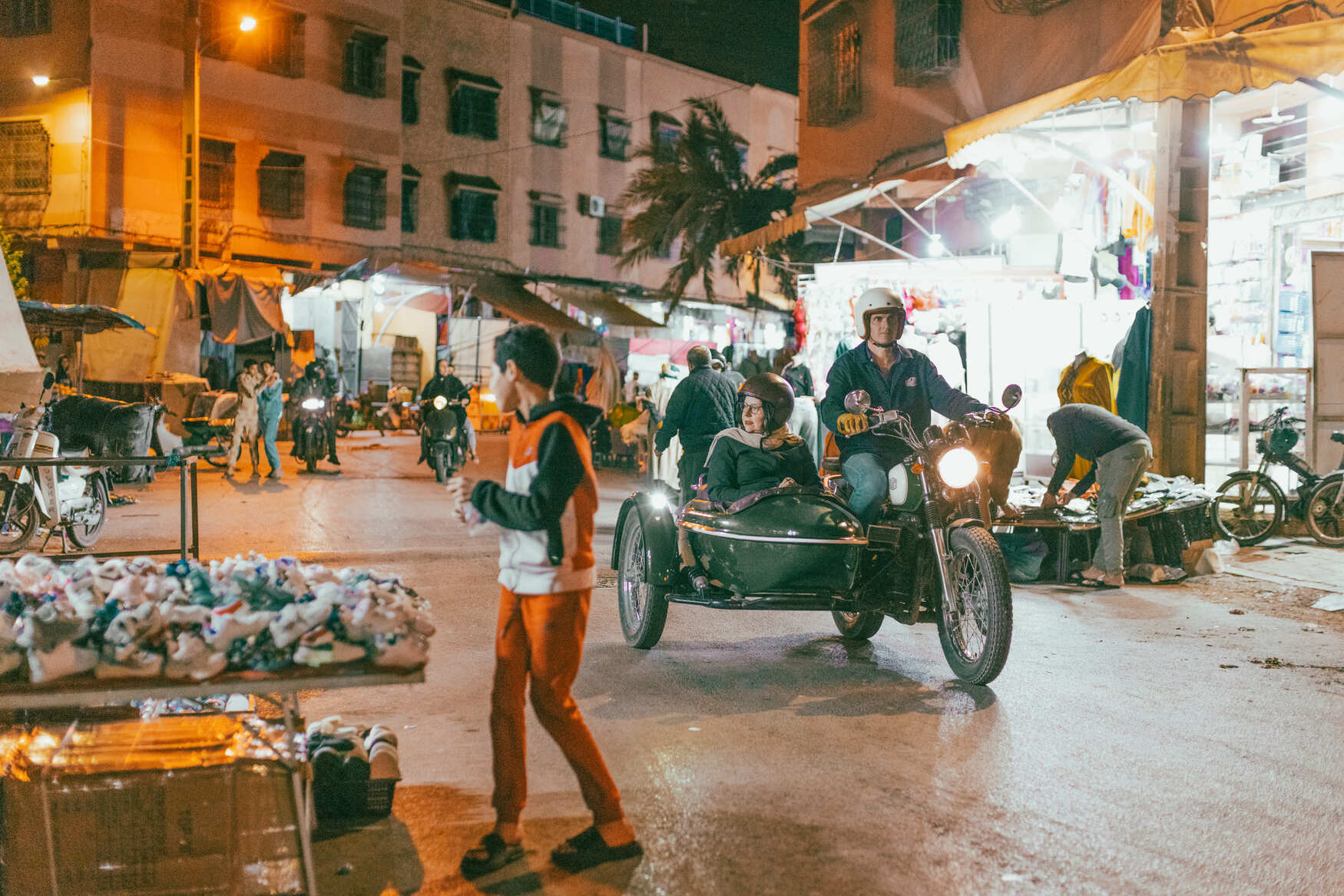
Discover all our Marrakech excursion rides
- A closed, already broken-in walking pair: soft trainers or comfortable city shoes. Never bring a new pair as your only option.
- An open pair for the riad, the pool and the evenings.
- Avoid heels, including for a dinner: the last few metres are often covered on foot in a cobbled alley.
- If you are planning a mountain excursion, choose high-top shoes with a lugged sole: trainers are not enough for a hike of several hours.
The list, in a table
| Item | Spring / autumn | Summer | Winter |
|---|---|---|---|
| Tops | Short and long sleeves, cotton | Loose, light colours, cotton or linen | Long sleeves + jumper |
| Bottoms | Light trousers, skirt or long dress | Flowing trousers, long dress | Trousers, jeans |
| Evening layer | Thin jacket | Light scarf | Coat or warm jacket |
| Head and sun | Sunglasses, sunscreen | Wide-brimmed hat, sunglasses, sunscreen | Sunglasses, sunscreen (strong sun at midday) |
| Footwear | A closed, broken-in pair + an open pair | ||
What comes in handy and gets forgotten
- A light scarf: it covers the shoulders at the entrance of a place of worship, protects the back of the neck from the sun, and doubles as a scarf in the evening. It is arguably the most versatile accessory in the suitcase.
- A soft backpack or a bag that closes, to be worn in front of you in very busy places such as Jemaa el-Fna.
- A water bottle: in the summer heat, you drink far more than expected, and it avoids buying plastic bottles all day long.
- Cash in small denominations: the souks, the taxis and the stalls do not take cards.
- Room in your suitcase: between the spices, the ceramics and a possible rug, the return trip is always heavier than the outbound.
- A simple first-aid kit: anti-diarrhoeal, blister plasters, or hand sanitiser.
What you can leave at home
You can leave at home the hairdryer and any specific adapter: the sockets are the same as in France, at 220 V. An umbrella is rarely essential, except for a stay in March. There is also no need to bring a very smart outfit, unless you are planning a dinner in a palace hotel, or a rigid handbag, which is impractical in the alleys.
A word on shopping throughout the country: light cotton clothing can be found on the spot at modest prices, and a Moroccan tunic bought on the first day often settles the question of what to wear in the medina for the rest of the stay, while adopting the local style.
Dressing for a side-car ride
If your programme includes a side-car excursion, anticipate a few simple details: for women, tie back long hair and leave the wide-brimmed hat behind, as it is hard to store in the boxes: a cap or a knotted scarf slips easily under the helmet. The rest does not change: comfortable clothing, closed shoes, one more layer in the morning or the evening, to protect you from the cool air.
Marrakech Insiders, a local operator, offers six types of tour from 1.5 to 3 hours for one or two passengers per side-car with a private Insider who speaks French, English, Spanish or Arabic. The Essential Ride (1.5 hours) and the Secret Ride (3 hours) explore the Palmeraie, the modern Guéliz and the historic Medina. In both cases, the itinerary is always fine-tuned at departure with your Insider to settle on the most interesting route. In summer, the Night Ride (1.5 hours) lets you set off at nightfall, when the temperatures become more pleasant.
The tours and their prices are detailed here. For a practical question about the schedule, availability or what to wear, WhatsApp remains the fastest way to get an answer.